한국어
한국어 English
 日本語
日本語Forged Technology
Forging is a plastic forming method that forms metal by applying pressure and pounding.
In addition to forging, there are casting and cutting methods.
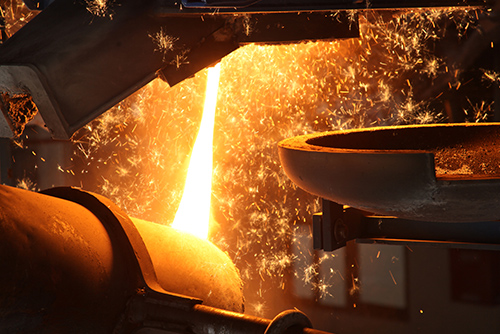
Casting involves pouring molten metal into a mold. Cutting involves cutting the metal using a tool to shape it.
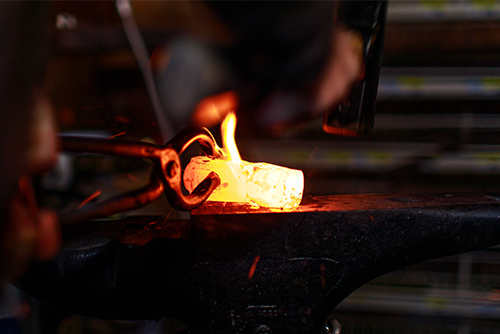
Forging methods include "free forging" and "die forging." Free forging involves placing the metal on a support and pounding it to form it.
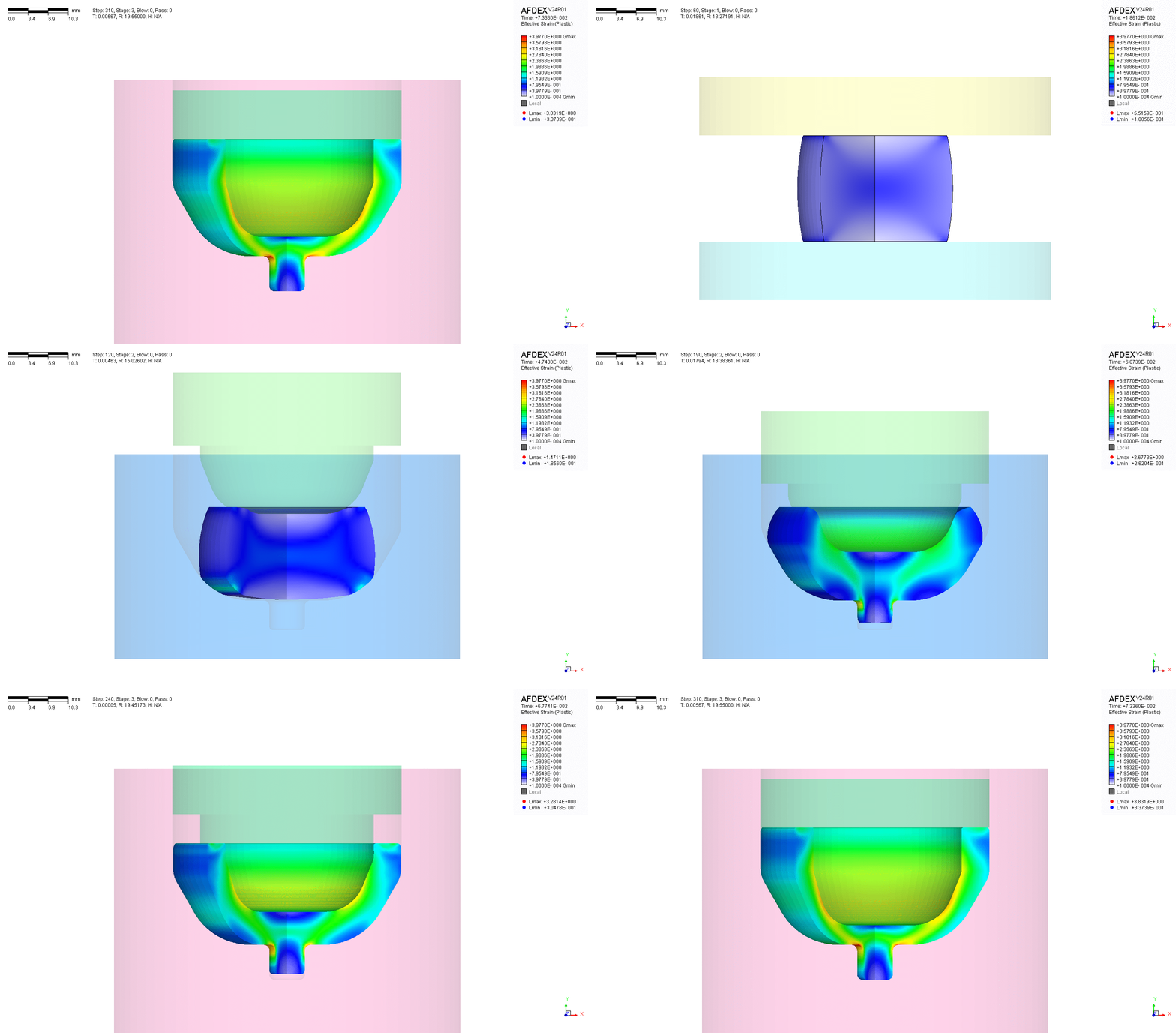
Die forging involves placing the metal in a mold and pressing it to create the shape of the product. Therefore, it is also called "press forging." Die forging allows for the production of many products with consistent precision.
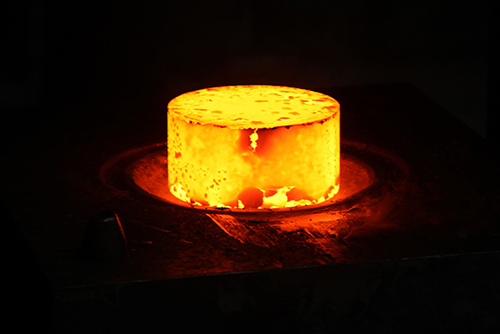
There are three types of forging: "cold," "warm," and "hot." Cold processing is performed at room temperature, warm processing is performed at 600°C to 850°C, and hot processing is performed at 1,000°C to 1,200°C. The higher the temperature, the easier it is to form freely.
Forging methods include "free forging" and "die forging." Free forging involves placing the metal on a support and pounding it to form it.
Die forging involves placing the metal in a mold and pressing it to create the shape of the product. Therefore, it is also called "press forging." Die forging allows for the production of many products with consistent precision.
There are three types of forging: "cold," "warm," and "hot." Cold processing is performed at room temperature, warm processing is performed at 600°C to 850°C, and hot processing is performed at 1,000°C to 1,200°C. The higher the temperature, the easier it is to form freely.
Characteristics of Forged Products
The most significant characteristic of forged products is their strength. In forging, the metal crystals are formed through compression, and the metal flow is generated, maintaining mechanical properties, especially hardness and strength.
On the other hand, casting-based forming processes can cause internal bubbles or apply force when cold. Furthermore, cutting also reduces strength because the metal structure is severed.
Woosung Enterprises focuses on hot die forging as its main product, and is continuously improving its technology to maximize quality and process stability.
Hot die forging offers the following advantages:
- Because it forms into a shape close to the final stage, it minimizes cutting and improves processability.
- It enables mass production of complex shapes, with minimal dimensional variation in the final product.
- The denser structure allows for metal flow, resulting in less variation in mechanical properties such as strength.
On the other hand, casting-based forming processes can cause internal bubbles or apply force when cold. Furthermore, cutting also reduces strength because the metal structure is severed.
Woosung Enterprises focuses on hot die forging as its main product, and is continuously improving its technology to maximize quality and process stability.
Hot die forging offers the following advantages:
- Because it forms into a shape close to the final stage, it minimizes cutting and improves processability.
- It enables mass production of complex shapes, with minimal dimensional variation in the final product.
- The denser structure allows for metal flow, resulting in less variation in mechanical properties such as strength.